
Barry Bonds: Confounding Variables, Cognitive Dissonance, and a Case for the Hall of Fame
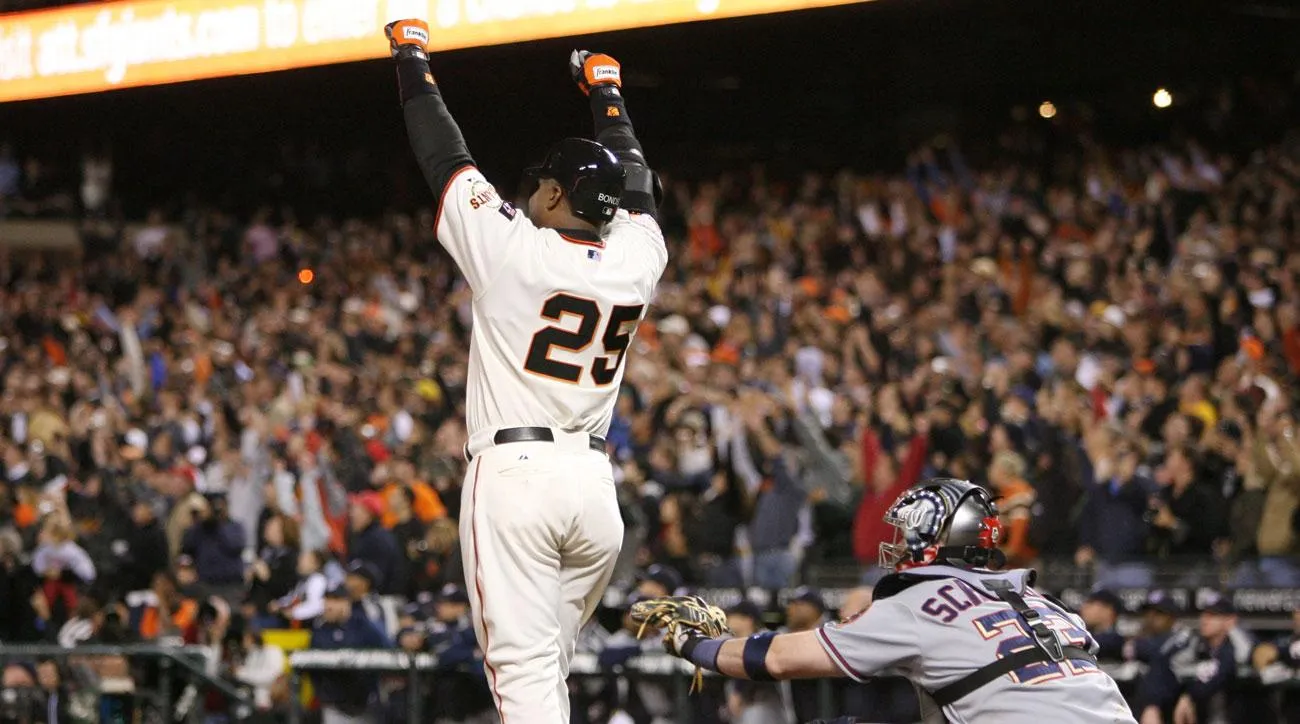
As baseball becomes more analytically driven, one has to wonder why gurus have not blessed Barry Bonds’s Hall of Fame candidacy. Bonds' superficial accolades are unquestionable: Major League Baseball’s all-time home run leader, the all-time leader in walks, and a record seven Most Valuable Player awards. However, for all his achievements, his candidacy among the pantheon of greats has been tainted by talk of steroid use. Oldtimers would say that Bonds’ alleged drug use allowed him to rewrite the record books one swing at a time. Saying this, though, neglects an important lesson from basic statistics: the issue of confounding variables.
While it is almost medically, if not visually, assured that Bonds took steroids, there is only one viable response: so what? Tim Tebow is a living example of the fact that strength does not equate to greatness in baseball; Michael Jordan too showed over and over again, even exceptional athleticism is not enough. Bonds is thus proof that the art of a perfect swing lies in outlier-level hand-eye coordination. His statistics were not produced because he stuck a needle in his arm; rather, his skill on the field is a product of freakish genetics.
For baseball commentators to tout the game’s integrity to keep Bonds, and others, from achieving the pinnacle of a player’s career is ludicrous. Outside of the moral implications of keeping the game’s greatest hitter from forever being enshrined in Cooperstown, fallacies are littered throughout their argument. For one, by commenting on steroids alone, those who refuse to vote for Bonds’ candidacy neglect to acknowledge his innate gifts.
To this end, Bonds’ home runs are likely only tangentially related to his drug use. Sure, Bonds’ balls in play may have traveled an extra thirty feet, making a ball that should be a routine fly out clear the wall in right field. Yet this difference is unknowable because, in layman’s terms, the correlation between home runs and steroids is not one to one -- another factor, Bonds’ ability to, say, perceive the rotation of a baseball, is far more likely the cause of any contact.
But, most of all, what amounts to tarnishing the Hall of Fame is arbitrary. For example, Curt Schilling has to be one of the most repugnant human beings in the world. He has said, on record, so many racist, homophobic, or misogynistic comments you would think he is preparing a legitimate run for president. It is thus an atrocity to see Schilling garner nearly as many votes as either Barry Bonds or Roger Clemens -- ostensibly, because of how they ruin the Hall’s “good name” with their alleged steroid use. Why does this standard apply to some but not all? Surely, the stain Schilling presents is far worse for baseball, far worse for the Hall of Fame, than either Bonds or Clemens participating in what was certainly commonplace for their era.
To conclude, then, let me be clear: I think Barry Bonds cheated. Of course, there are no positive tests to prove it; yet, like Potter Stewart, a simple eye test can confirm the suspicion. More importantly, I think by that same standard Hank Aaron cheated too. “Greenies” were the famed drug of choice for ballplayers in the 70s to get them through the grueling season. Unsurprisingly, though, not once -- literally, not one time -- has any writer or member of the Hall of Fame committee ever lamented Aaron’s admission. Conversely, nearly two years ago, the vice chairman of the Hall committee demanded that the doors be shut on Bonds for the “risk of tainting the Hall of Fame.” As a private organization, sure, the Hall of Fame has a right to admit who they choose; however, for the sake of the game and its legacy, it should admit the best. Barry Bonds among them.