
CUSBR In the News: Columbia Spectator Feature 10/15/24
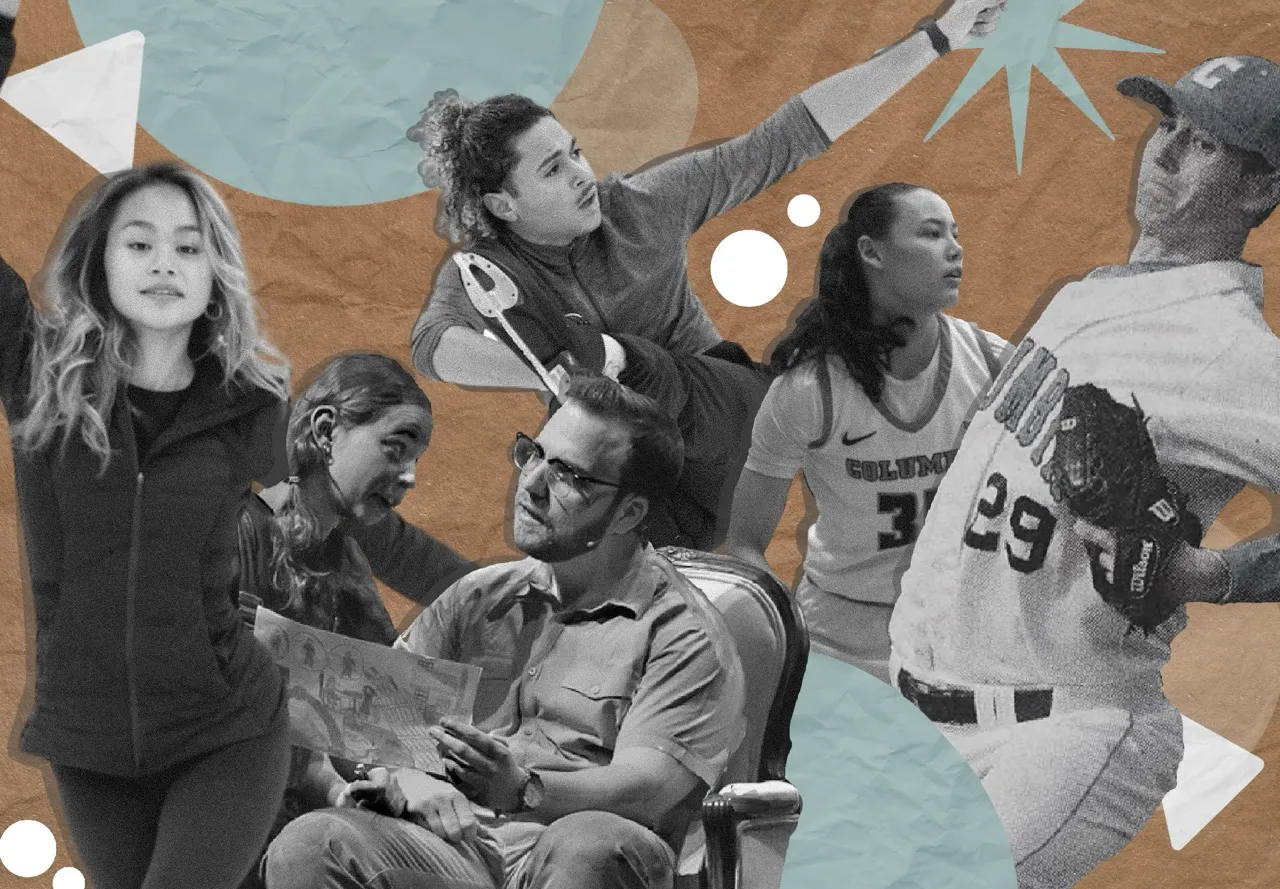
Originally featured in the Columbia Spectator:
Just Our Thing: Columbia Society for Baseball Research
BY NORI LEYBENGRUB • OCTOBER 15, 2024 AT 10:04 PM
The other day I got lost in Schermerhorn Hall looking for the Columbia University Society for Baseball Research. When I finally approached their meeting room, I doubted if I was in the right place. With high ceilings, dark wooden paneling, and those lecture chairs with attached writing tables, the room seemed grand and foreboding, but the way the club members relaxed into those uncomfortable chairs made the whole room inviting.
The club’s vice president, Triston Lee, GS ’25, admits the name sounds a little intimidating. The Columbia University Society for Baseball Research. You may be thinking, “Baseball? Research? Society?” What you may not realize is that few American college campuses are able to organically unite sports enthusiasts and athletes with mathematicians, data scientists, and more over the pursuit of sports analytics through the very game that founded the field of sports analytics: baseball.
Columbia demands a lot from its students—everywhere from the classroom, to extracurriculars, to competitive internships and employment opportunities. Sometimes, it feels like everything students do here is for a professional purpose. The Society for Baseball Research presents an opportunity to engage one’s passion for sports in a way that feels genuine.
While news cameras zoomed in on Columbia’s divided campus last year, the society spent hours together watching baseball games and sharing the latest baseball drama. Club members pitched all the questions they wanted to answer: Does the seam of a baseball impact a pitcher’s performance? How do Major League teams determine the size of their fields without any requirements? There is an unbelievable amount of data in American baseball that can be extracted from the sensors installed inside sports stadiums. These sensors can measure the smallest movements, anything from the pitchers’ fingers to the arch of a ball. Any question can be answered by mixing math, data analytics, and baseball expertise.
The society was founded in 2019 and has already published research in the Society for American Baseball Research’s Baseball Research Journal. The club’s founders, Anthony Montes, CC ’21, and Charles Orlinsky, CC ’20, still stick around.
Montes now works in operations for Major League Baseball, which passed rule changes for the sport that were a hot topic of discussion last year. Leo Garkisch, GS ’26, the society’s treasurer, described how the rule changes, which include the addition of a pitch clock and increased base sizes, aimed to speed up the game’s pace and bring more action to MLB audiences. Garkisch believes these rules might be changing a historic game that doesn’t need to be more entertaining—but he didn’t tell Montes that when, amid campus shutdowns, he came to speak with club members about his career success.
The club’s alumni still come back. Amid campus shutdowns last semester, Anthony Argenziano, CC ’20, an alum who now works for the Pittsburgh Pirates, made his way from the Mets’ Citi Field in Queens to his home base on 116th Street, the Society for Baseball Research. He talked to current members about his work in the sport, and how his experience in the society prepared him for the minute-to-minute analytics he does for the Pirates.
While the broader narrative of campus last semester was of impassable division, the society continued to foster their microcommunity. As community members left campus amid student protests, President Sean Kuehn, CC ’26, said gathering together to watch games and gripe about the outcomes sustained him. The rest of the board agreed.
Luke McGuire, CC ’27, the club’s secretary, added that the essence of the club can be described through the double take of people at the club fair. It’s the second where you realize there is a home on campus for that weird thing you love. For the Society for Baseball Research, that thing is talking about baseball in surprising detail.
That second is one we are all familiar with.
It’s the second—the passion for detail—that encapsulates Columbia. Think of all the niche and fascinating ways that we come together as nerds in love with our passions. On the day of the club fair, these passions fill every walkway in the center of campus. Under the unforgiving sun and heat, with so many people vying for our attention from all sides, we find the communities that make this grand campus home. We are so obsessed with pursuing our interests, we can’t imagine suspending them.
When I arrived at Columbia, I couldn’t imagine this university without a student group where I could share what I loved with the people around me. So I founded the Columbia University Figure Skating Club. Two years ago, I went alone to Monsey, New York, to compete in the Violet Classic. The other competitors remarked, “Since when did Columbia have a team?” Their question was partly wrong, by the way, because my team of one was representing Barnard. But last year, my figure skating club couldn’t be missed: Twenty strong, we were the loudest, most raucous and celebratory team. We were proud just to have made it there together.
Despite the ever-tightening club sports budget and a host of new restrictive policies with a debilitating effect on club sport operations—including new minimums for paying coaches and the inability of students to drive to competitions—figure skating is what continues to bring our little community together, no matter what. Recently, I left the club’s executive board because I wanted to get a sense of how the club would survive without me. It was a tough decision, but I’m confident that the figure skating community has never been stronger.
As part of the Activities Board at Columbia, any club must prove a thriving membership and event consistency to receive any financial assistance for its operations. Meeting these standards is especially tough for a club like the Society for Baseball Research, which was founded just before the rise of COVID-19 and celebrated its five-year anniversary amid student protests on a polarized campus. But in the end, passion prevails.
How do I know it’s passion?
In short, because clubs on campus are part of a larger infrastructure of student organization funding. It all flows from undergraduate student life fees, is filtered by the undergraduate school councils, and goes into the hands of the student governing boards. Once it gets there, the pot is miniscule.
Even when it seems like Columbia is tearing apart at the seams, we’re still a school full of people doing our thing. We’ll keep watching baseball games, and we’ll keep streaming figure skating on the screen in Altschul Auditorium—and nothing will stop us from coming together, not even a lack of funding.
Nori Leybengrub is a senior at Barnard College majoring in sociology and minoring in the urban teaching track for secondary social studies. She is inspired by the niche ways that the passions and interests of students on campus lead them to be involved in all kinds of microcommunities, and happenings that group by group, event by event, strengthen the campus community as a whole. Her column, Just Our Thing, is about exploring these microcommunities and how they contribute to the fabric of Columbia amid its perceived time of intense division.