
Way Too Early: Deadline Deals
Three weeks into the season, we have officially entered the throes of April baseball. Yes, baseball is back. Yes, a lot of the opening day excitement has faded and baseball just does not have the same energy it does down the stretch in late September. But for now, baseball fans speculate whether or not teams have what it takes to contend in October and stay in the hunt over the course of the remaining one-hundred and forty games of the season. However, the truth of the matter is that fans, executives, and players don’t really know what their team will look like when games start to count--or seem like they do.
Even though it is too early, based on what we have seen so far we can try to project what contending teams will look like after the trade deadline and what moves teams will make to improve their rosters for that final push. This season marks the first season that the July 31st deadline will be a team’s final opportunity to trade for reinforcements, as the MLB did away with the lucrative waiver trade deadline, which infamously allowed the Astros to add Justin Verlander for the 2017 Playoffs. Therefore, teams will be awfully careful while revising their roster at the deadline this season. Below are some deadline deals I am projecting way too early:
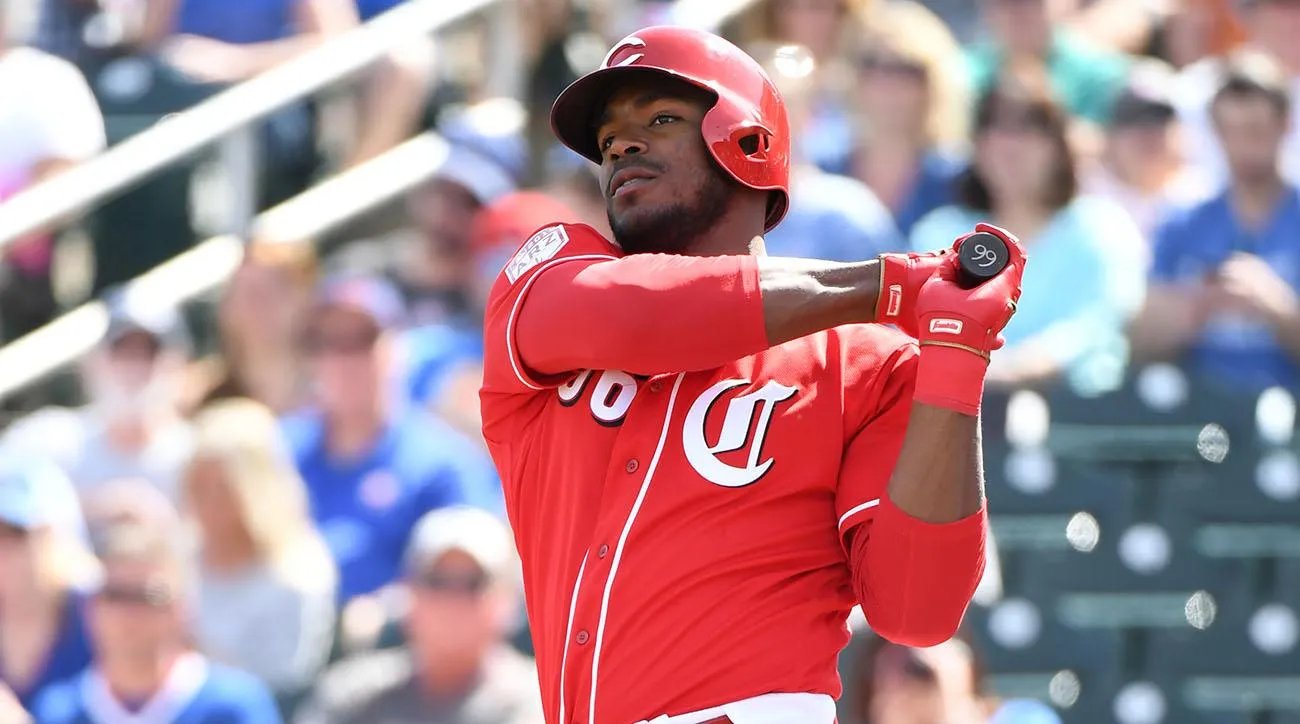
Yasiel Puig to the Indians:
It feels like this deal has been in the works for months but I truly think this deal makes a lot of sense for everyone involved. Puig has struggled in 2019 with 12 hits in 73 plate appearances, good for an abysmal WRC+ of 18 and a Strikeout Rate up nine percent from 19.6% in 2018 to 28.6% to 2019. It’s still early and Puig has shown that he is a reliable middle of the order hitter with 51 home runs over the past two seasons, so look for some improvement.
The Reds, despite a valiant effort this offseason, look like they are going to come up woefully short behind the Brewers, Cardinals, and Cubs in the NL Central. Meanwhile, the Indians are in desperate need of an outfielder. The Indians outfield ranks 25th in the league in WRC+ with 73, 25th in wOBA at .284, and fourth in strikeout rate at 28%. I know Cleveland is still favored to win the AL Central but if they are going to make a run in October then some help in the outfield is necessary.
Madison Bumgarner to the Twins:
The Giants have been hesitant to pull the trigger on dealing Bumgarner for the past few years, but I think this is the deadline they finally move their long-time ace. Bumgarner is set to be a free agent at the end of 2019 and the Giants depleted farm system could use any help it could get. Even though Bumgarner isn’t the pitcher he once was he’s still pretty effective with an ERA of 3.66 in five starts and a 23.9% strikeout rate which is down 3.7% from his last full season in 2016. Bumgarner has also proven that he is still extremely effective against left-handed hitters, limiting lefties to just a .143 batting average and .201 wOBA.
The Twins have surprisingly proven themselves as a threat to the Indians in an extremely weak AL Central. The Twins revamped twins lineup, with offseason additions Nelson Cruz and Jonathan Schoop and the second-coming of Jorge Polanco, has carried the Twins to a hot 13-9 start and positive run differential. But the rotation has been very average ranking 19th in the league in ERA at 4.63 and 23rd in xFIP at 4.53. The Twins have a few solid pitchers (Berrios, Gibson, and Pineda) but they could really use a frontline starter with playoff experience to help them make a push down the stretch. Bumgarner’s regression makes him a cheap option that can carry them to and possibly through the postseason.
Jose Abreu to the Rockies
At 32 years old, it doesn’t seem like Abreu fits with the rebuilding White Sox, who signed first baseman Yonder Alonso in the offseason. Chicago looks to be a few years away still from fielding a contending team and with the Abreu’s contract expiring it makes the most sense to deal the aging infielder to free up cap space to potentially lure in the next Manny Machado-like free agent. Despite a down year in 2018 Abreu has already hit five home runs in 2019 and driven in twenty-four runs, which is good for a 118 wRC+.
Meanwhile, Colorado has had a sinkhole at first base over the course of the past few seasons, and this year doesn’t seem to be any different. Even though offseason acquisition Daniel Murphy, who was supposed to play a lot of first this season, hasn’t played much in 2019 due to injury, Rockies’ first baseman have posted an abysmal 64 wRC+, the second-highest strikeout percentage in the league at 29.1%, and the 27th best ISO at .140. Abreu makes a lot of sense for the Rockies because he would provide some middle of the lineup power beyond Story and Arenado. Not to mention with the return of Daniel Murphy he would lengthen a lineup that has struggled thus far in 2019 ranking 29th in wRC+ at 66 and 23rd in wOBA at .296.
Shane Greene to the Nationals:
The deadline seems to be the time where contending teams load up on bullpen arms in anticipation for high stakes innings down the stretch and in the postseason. Prior to 2019, Shane Greene had always been a high strikeout guy, averaging roughly nine K/9 over the course of four big league seasons, who never really held his own out of the bullpen. However, Greene seems to have reinvented himself in 2019 posting a career-best 1.38 ERA in 13 innings thus far. It seems Greene has induced much softer contact than in previous years as his HR/9 and BABIP are down from 1.71 and .311 in 2018 to .69 and .138 in 2019. Not to mention Greene has increased his groundball rate 12.6 percent from 40.7% in 2018 to 53.3% in 2019. Greene is set to go into arbitration next season but if he keeps performing at this level it doesn’t seem worth it for the Tigers to keep him around given an already high payroll for a below average team.
What else is new--the Nats bullpen continues to struggle. This year it seems the bullpen has taken its woes to a new level posting a league-worst 6.99 ERA. With a rotation that consists of Scherzer, Strasburg, and Corbin, the bullpen needs to get better if they have any hope of contending down the stretch and into October. Greene makes a lot of sense for the Nats because he is cheap and can provide an immediate surge to the back end of the bullpen that seems to struggle the most. Greene has not only proven himself as a reliable closer, but also as a premier option with guys on base. Greene has stranded 92.1% of runners on-base this season which would be an immediate improvement from the Nats league-worst 63.1 LOB%.